|
One of the holy
trinity, Shiva is a living god. The most sacred and most
ancient book of India, the Rig Veda evokes his presence in
its hymns. Vedic myths, ritual and even astronomy testify to
his existence from the dawn of time. But Shiva, the
destroyer, the mendicant, is undefinable: he is the great
yogi, the guardian of the absolute. His actions are the
themes of the myths in which his nature unfolds.
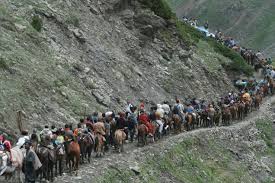
"The Himalayan pilgrimages are the oldest organised travel
system, evolved over time by Hindu sages and embodying the
spirit of wander, adventure and spirituality"
Shiva, in the form of a lingam, is formed naturally of an
ice - stalagmite One of the holy trinity, Shiva is a living
god. The most ancient and sacred book of India, the Rig Veda
evokes his presence in its hymns. Vedic myths, ritual and
even astronomy testify to his existence from the dawn of
time.
Shiva is known to have made his home in the Himalayas. He
built no house nor shelter, not for himself or his bride. He
was an ascetic, and yet married; he could be both for "he
was the wild god sporting in the forest or taking his ease
on a cloud."
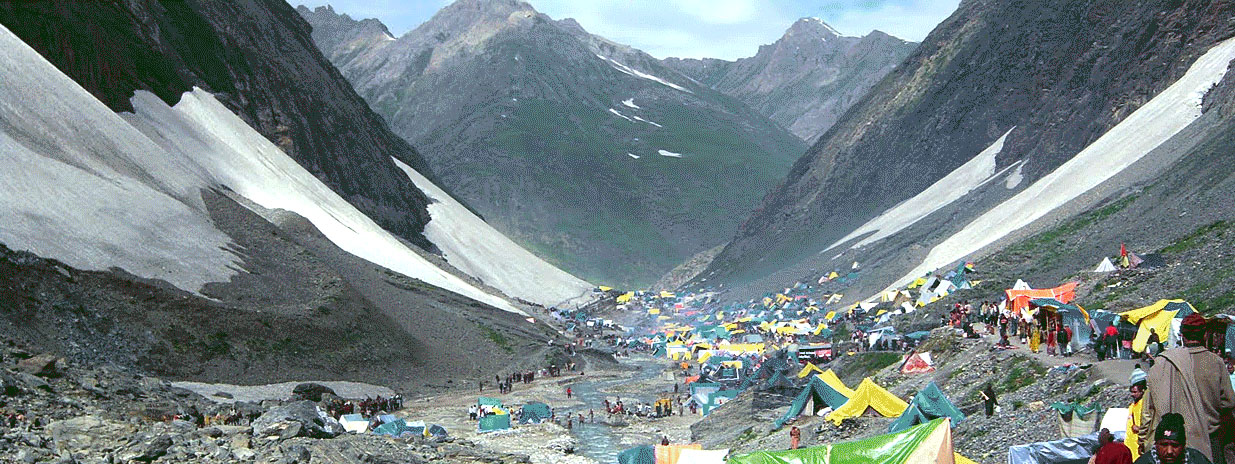
The trek to
Amarnath, in the month of Shravan (July-August) has the
devout flock to this incredible shrine, where the image of
Shiva, in the form of a lingam, is formed naturally of an
ice-stalagmite, and which waxes and wanes with the moon. By
its side are, fascinatingly, two more ice-lingams, that of
Parvati, and of their son, Ganesha.
Trek to Amarnath yatra
Situated i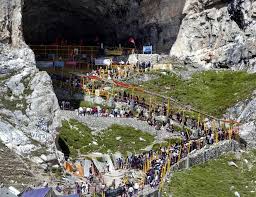 n
a narrow gorge at the farther end of Lidder valley, Amarnath
stands at 3,888 m and is 44.8 km from Pahalgam and 141 km
from Srinagar. Though the original pilgrimage subscribes
that the yatra be undertaken from Srinagar, the more common
practise is to begin journey at Pahalgam, and cover the
distance to Amarnath and back in five days. Pahalgam is 96
km from Srinagar. n
a narrow gorge at the farther end of Lidder valley, Amarnath
stands at 3,888 m and is 44.8 km from Pahalgam and 141 km
from Srinagar. Though the original pilgrimage subscribes
that the yatra be undertaken from Srinagar, the more common
practise is to begin journey at Pahalgam, and cover the
distance to Amarnath and back in five days. Pahalgam is 96
km from Srinagar.
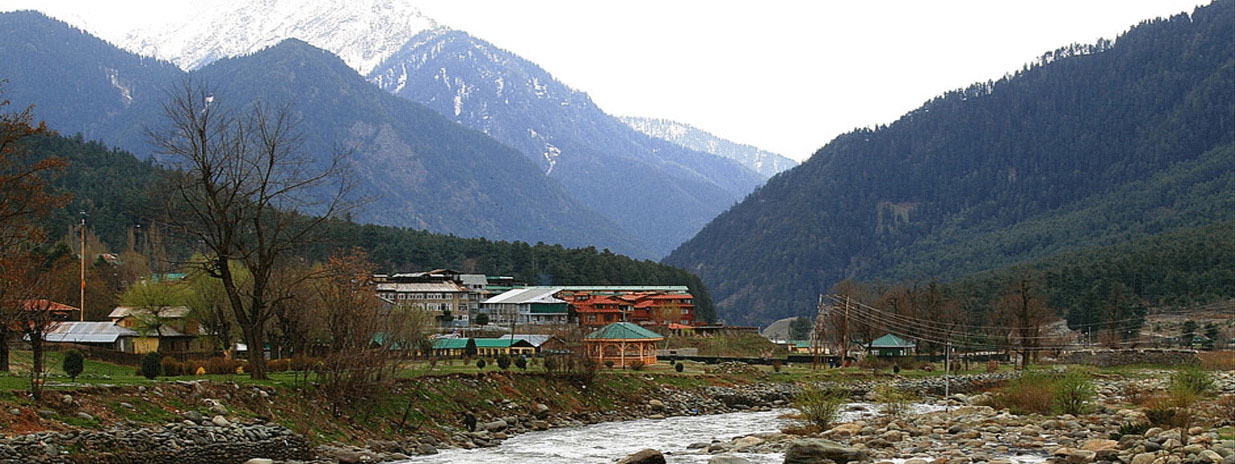
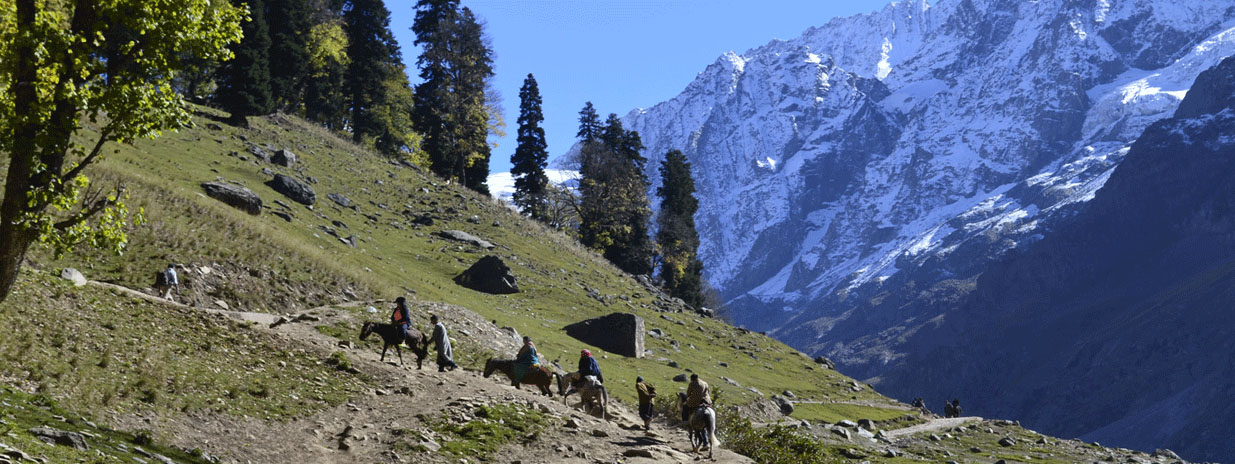
The trek from Pahalgam to Amarnath cave is on an ancient
peregrine route. The 45-km distance is covered in four days,
with night halts at Chandanwari, Sheshnag (Wawjan) and
Panchtarni. The distance from Pahalgam to Chandanwari (12.8
km) is covered in about five to six hours, and the trail
runs alung the Lidder river. Pilgrims camp here on the first
night out. A major attraction here is a bridge covered, year
round, with ice even though the surroundings are free from
it.
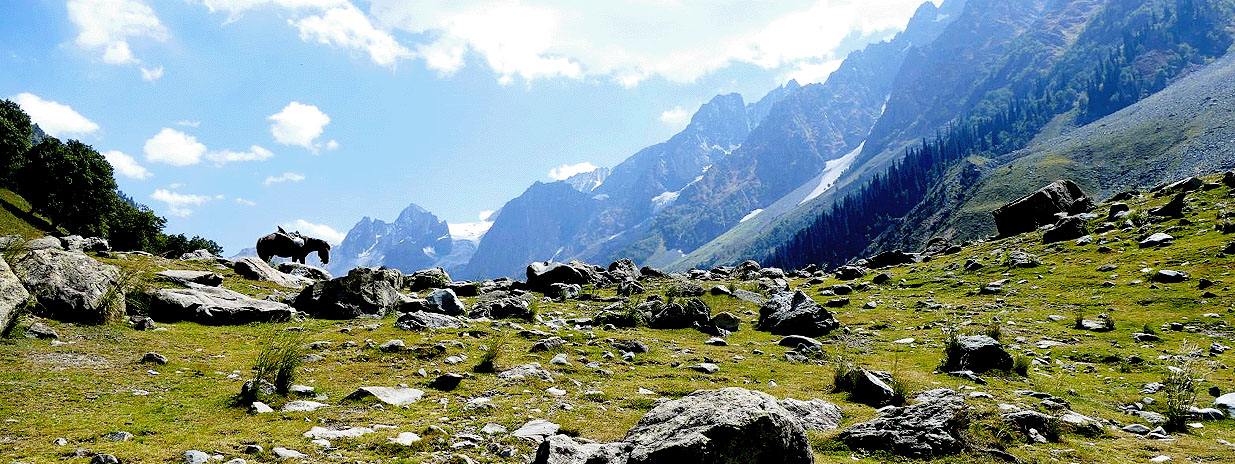
The next day's trek, of 13 km, is through spectacular,
primeval countryside, and the main centre of attraction is
Sheshnag, a mountain which derives its name from its seven
peaks, resembling the heads of a mythical snake. The journey
to Sheshnag follows steep inclines up the right bank of a
cascading stream and wild scenery untouched by civilization.
The second night's camp at Wawjan overlooks the deep blue
waters of Sheshnag lake, and glaciers beyond it.
There are legends of love and revenge too associated with
Sheshnag, and at the camp these are recounted by campfires,
to the stillness of a pine-scented, Himalayan night.
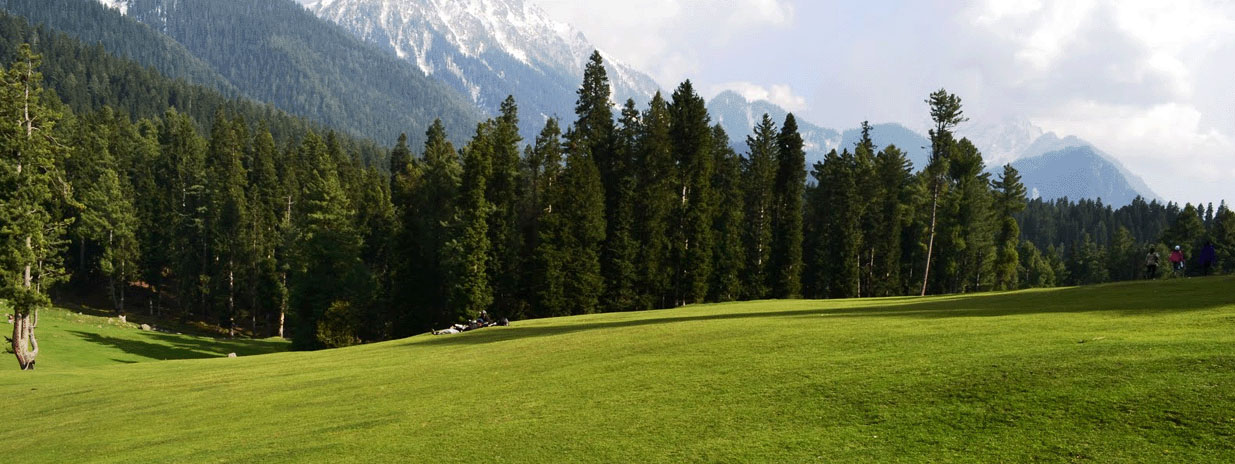
The third day's 13 km trek steadily gains height, winding up
across Mahagunas Pass at 4,600 m and then descending to the
meadow-lands of Panchtarni, the last camp enroute to the
holy cave.
From Panchtarni to Amarnath is only 6 km, but an
early morning's start is recommended for there is a long
queue awaiting entrance to the cave.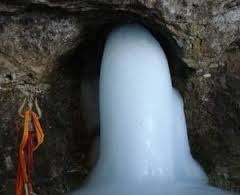 The same day, following darshan, devotees can return to
Panchtarni in time for lunch, and continue to Wawjan to
spend the fourth night out; or continue further to Zojibal,
returning to Pahalgam on the fifth day.
The same day, following darshan, devotees can return to
Panchtarni in time for lunch, and continue to Wawjan to
spend the fourth night out; or continue further to Zojibal,
returning to Pahalgam on the fifth day.
Entrance to the cave is regulated, and darshan a hasty
affair for there are many others waiting outside to pay
homage before the awesome Shivalinga. The devotees sing
bhajans, chant incantations, and priests petform aarti and
puja, invoking the blessings of Shiva, the divine, the pure,
the absolute. For those who journey with faith, it is a
rewarding experience, this simple visitation to a
cave-shrine, the home of the Himalayan mendicant who is both
destroyer and healer, the greatest of the Hindu deities.
Entrance to the cave is regulated, and darshan a hasty
affair for there are many others waiting outside to pay
homage before the awesome Shivalingam. The devotees sing
bhajans, chant incantations, and priests perform aarti and
puja, invoking the blessing of Shiva, the divine, the pure,
the absolute. |




 1
1 2
2 3
3 4
4 5
5 6
6 7
7 8
8 9
9 10
10 11
11 12
12